France & Monaco: Leading Europe’s Clean Transport with Renewable Fuels
France and Monaco are emerging leaders in low-carbon fuels, transforming waste oils, animal fats, and renewable electricity into clean energy for transport and industry. From biodiesel (FAME) to renewable diesel (HVO) and synthetic XTL fuels, the region is building a full value chain of sustainable, drop-in alternatives that cut emissions by up to 95% — paving the way for Europe’s decarbonized fuel future.
France and Monaco: Pioneering the Future of Low-Carbon Fuels
Across France and Monaco, the energy transition is accelerating. Both countries are investing heavily in low-carbon fuels to reduce greenhouse gas emissions and dependence on fossil energy. By transforming waste oils, animal fats, and renewable electricity into advanced fuels, the region is positioning itself at the forefront of European innovation in biodiesel, renewable diesel (HVO), and synthetic paraffinic fuels (XTL).
This movement reflects a broader ambition: building an industrial ecosystem capable of producing and distributing clean fuels at scale, while supporting the decarbonization of transport, construction, and logistics.
France: A Dynamic Hub for Biofuel Innovation
France has become one of Europe’s leading centers for biofuel production and research, supported by strong industrial expertise and regional investment. Several key players are driving this transformation.
Saipol (Groupe Avril) — France’s largest biodiesel producer — operates five sites, including a major facility in Sète. Its Diester® (FAME) and Oleo100 (B100) fuels are made primarily from French rapeseed oil, serving both blended and dedicated fleet markets.
Nord Ester, a specialist in biodiesel from waste oils and animal fats, produces more than 200,000 cubic meters per year across multiple feedstocks, including used cooking oil and category-3 animal fats.
ESTENER focuses on animal-fat biodiesel, achieving up to 83% GHG savings compared to conventional diesel, while Dielix, part of the Veolia Group, converts food-industry waste oils into fleet-dedicated B100 fuel.
In northern France, Gecco exemplifies circular-economy principles, collecting and processing local used cooking oils into a fully renewable fuel with over 90% emission savings.
At the industrial scale, TotalEnergies has become a cornerstone of France’s advanced fuel landscape. Through its La Mède and Oudalle biorefineries, the company now produces HVO100, a renewable diesel made from used cooking oil and animal fats — and crucially, a drop-in fuel compatible with existing diesel engines. This marks a significant step toward mainstream adoption.
Distributors of Drop-in Renewable Fuels
While biodiesel remains essential, the real momentum lies in drop-in renewable fuels — those that can fully replace fossil diesel without engine modification.
Two distributors stand out in France:
Altens markets PUR-XTL, a synthetic paraffinic diesel compliant with the EN15940 standard, sourced from international producers such as Neste or Shell.
Bolloré Energy offers Izipure, another EN15940-certified XTL fuel.
Both companies ensure national access to renewable, high-performance diesel alternatives, paving the way for immediate decarbonization across fleets and industries.
Monaco: Driving Clean Marine and Road Solutions
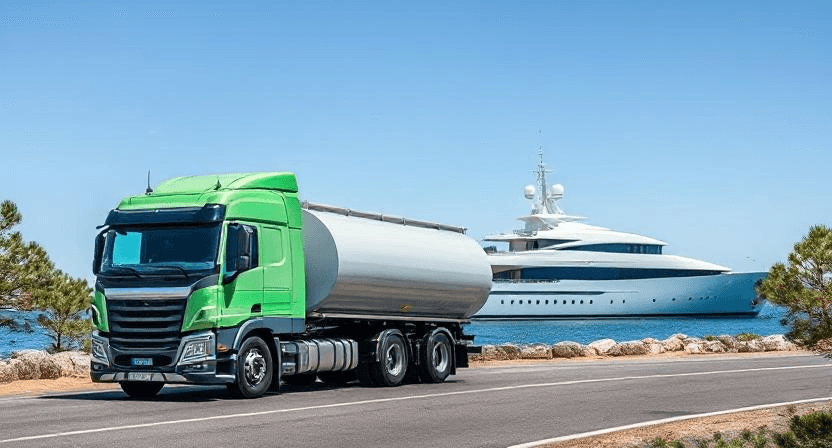
The Principality of Monaco has positioned itself as a pioneer in clean marine and transport energy.
Romano Energy, based in Monaco, distributes synthetic paraffinic diesel (XTL) made from biomass (BTL) and renewable electricity (PTL). Certified under the EN15940 standard, this fuel delivers up to 95% greenhouse gas reduction while maintaining full compatibility with conventional diesel engines.
Through its Secfuel network of self-service XTL pumps, Romano Energy makes these fuels directly available to marine operators and road fleets, reinforcing Monaco’s commitment to a sustainable energy model.
Understanding XTL Fuels
The term XTL, or “X-to-Liquid,” covers a new generation of synthetic fuels produced from various renewable sources:
- BTL – Biomass-to-Liquid
- PTL – Power-to-Liquid (using renewable hydrogen and captured CO₂)
- GTL – Gas-to-Liquid (when derived from non-fossil sources)
All XTL fuels meeting EN15940 standards are drop-in compatible, offering:
- Near-zero sulfur and aromatic content
- Ultra-clean combustion
- 70–95% greenhouse gas reduction
- Production from non-food, non-fossil feedstocks
These properties make XTL one of the most promising solutions for hard-to-electrify sectors such as aviation, maritime, and heavy road transport.
A Shared Momentum Toward Clean Transport
Together, France and Monaco are creating a full-spectrum renewable-fuel ecosystem — from conventional biodiesel (FAME) to advanced drop-in HVO and XTL fuels. This ecosystem not only enables industrial decarbonization but also strengthens energy sovereignty and regional economic resilience.
With growing production capacities, strong distribution networks, and innovation led by both public and private players, the region is poised to become a European benchmark for sustainable mobility.
At Heeding Climate Solutions, we believe in an integrated energy approach where sustainable fuels complement electrification to decarbonize transport, logistics, and construction — adapting each solution to the context where it delivers the greatest impact.